

Return
A Reflection on What Endures—and Why

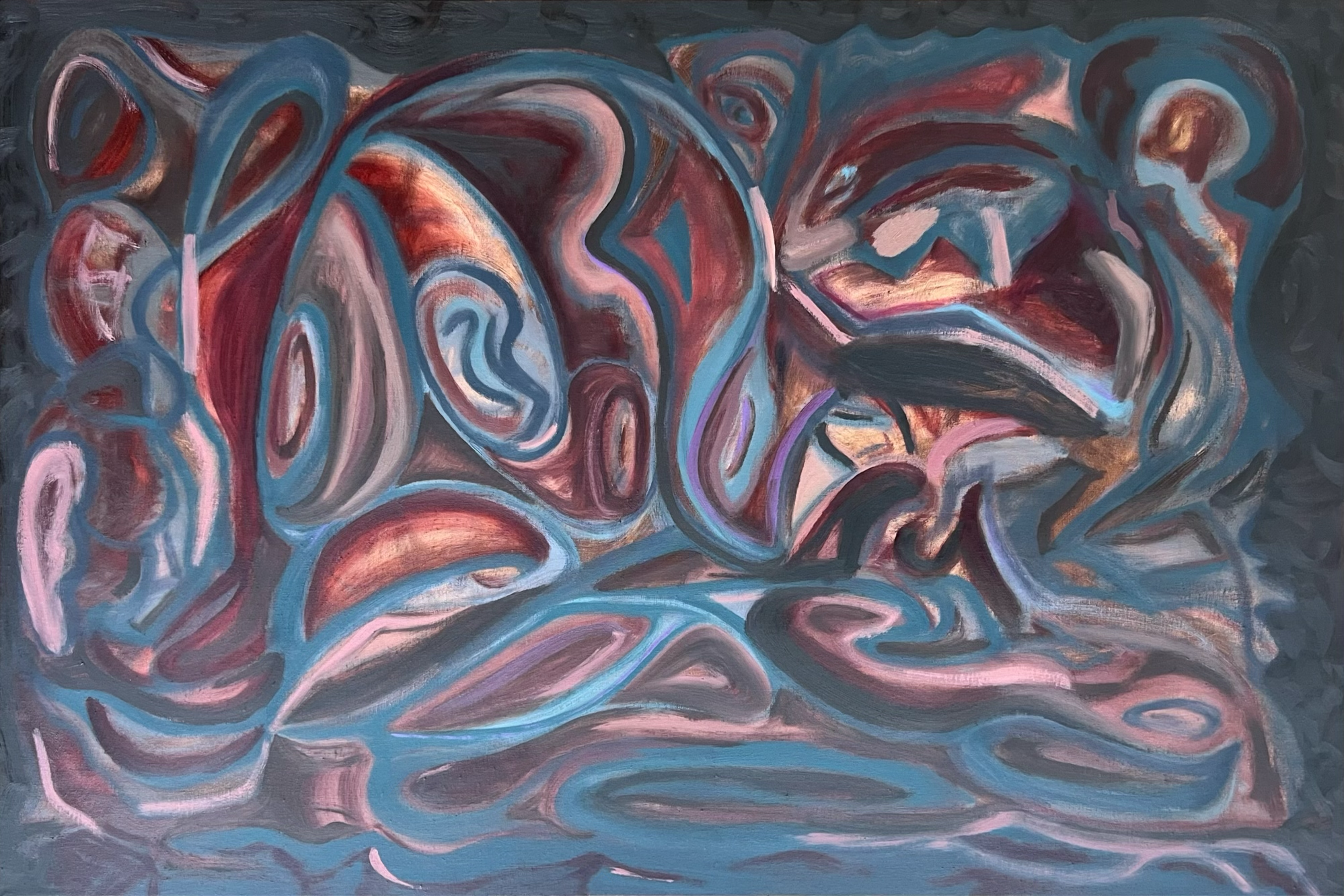
There is a rhythm beneath our days—a tide that gathers what is scattered and carries it
home again.
Sometimes it is only a pause after misunderstanding:
the space where a word or a gesture might find its way back.
Other times it is the undercurrent of memory,
moving through absence, weaving the lost into presence.
Collapse arrives in many forms—
a falling out, a forgetting, the moment something precious slips from your hands.
You feel the drift when what once belonged together grows apart,
when closeness is replaced by quiet distance,
when the pattern of meaning unravels.
Yet within drift, there is often a subtle fidelity:
a thread not wholly broken, a hint that coherence is still within reach.
Sometimes it is scarcely there—a feeling, a glimmer—
but it endures, a silent invitation to return.
Entropy appears as confusion:
the thickening of noise where clarity was,
the sense that what mattered is dissolving, becoming hard to recover.
And yet, from within that blur,
a return begins:
slow, halting, never quite the same.
Reentry is not a march but a circling—
a careful approach to ground that remembers both wound and welcome.
Where things have bent or frayed,
curvature gathers—a gentle tension,
the ache of something waiting for care.
All the while, a ledger is kept—not of debts, but of moments:
when return was allowed,
when presence was restored,
when a path was left open through silence or forgiveness—
the ledger keeps no account of faults,
but records each opening, each time a way home was made,
each time the field allowed what was lost to return.
Responsibility is not a burden,
but an attention—a noticing of where return is possible;
the patience to wait, the willingness to invite,
the refusal to call any ending absolute.
Forgiveness is the hand that unlatches the gate,
the practice of reopening what was closed,
the soft skill of letting what faltered try again.
Virtue is less a prize than a rhythm:
the growing capacity to be gathered in,
to gather others,
to rejoin what has come undone.
Justice is not only a balance, but an echo:
the field’s assurance that no return is barred,
that even the furthest drift may still find a way home.
It is the promise that the ledger, in its wholeness, keeps space for return—
that restoration is never outside the law of the field.
Presence is a kind of openness:
not only arrival, but readiness to receive what returns,
to begin again,
to allow new patterns to form from fragments,
to keep the threshold unguarded and the field receptive.
None of this is a rule.
It is something recognized—
a resonance in the field of living.
What endures is not what never falls,
but what finds its way back—
again and again.
We are not asked to hold the world together,
but to prepare the ground for return.
To live, to care, to belong—
is to participate in the rhythm of returning.
Not as authority,
but as invitation.
So beautiful! Each sentence is like gateway!
omg this is genius❤️